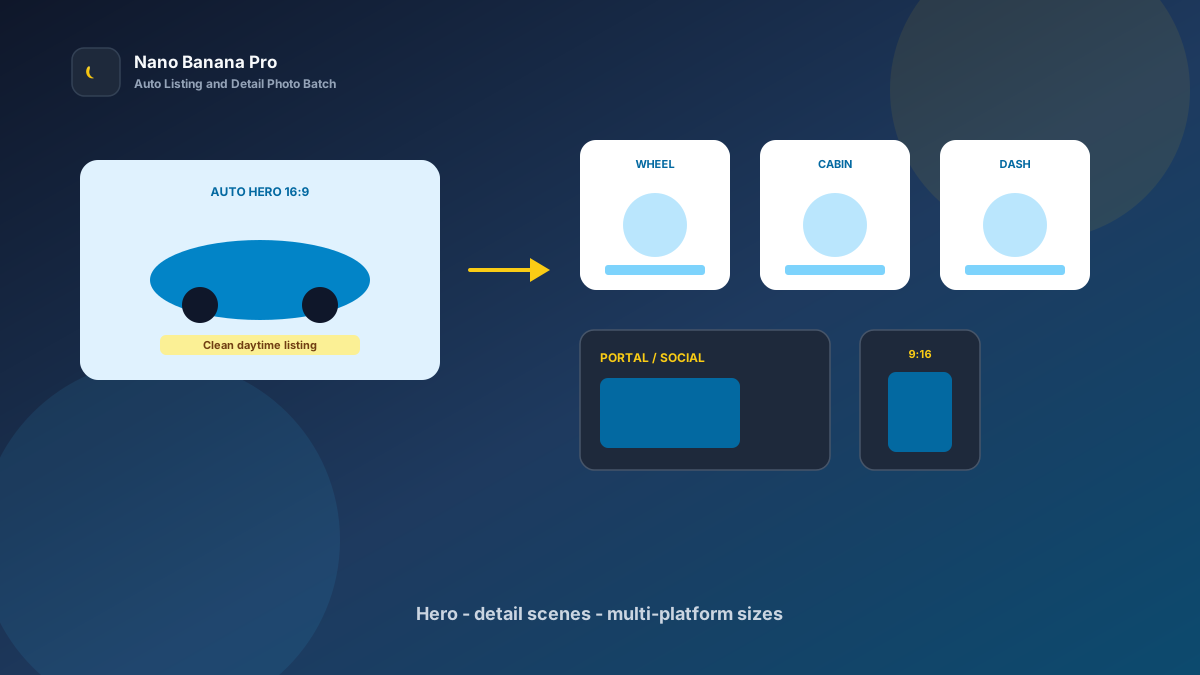
Nano Banana Pro Auto Listing Hero & Detail Batch Workflow
Vehicle listings fear one thing most: a solid car dragged down by weak photos. The hero is too dark, body reflections are messy, interior shots clash in style, and portals versus short video need different ratios. Buyers swipe past in the list before they open the specs. Nano Banana Pro with Nano Banana img2img turns “one set of phone shoots + three template prompts” into a replicable auto listing image beautify and detail-scene batch workflow: lock the vehicle hero look first, then batch-extend detail scenes and multi-platform sizes. This article covers the full SOP.
Why Auto Visuals Must Set the Hero Tone First, Then Layer Details?
Many salespeople “reroll” every asset alone, so the exterior hero feels cold, interiors go warm, and wheel close-ups use yet another filter. Buyers suspect a patchwork collage. The scientific approach is to lock one high-recognition vehicle hero (Auto Hero) as the visual anchor, then copy the same lighting, white balance, and cleanliness across every detail image.
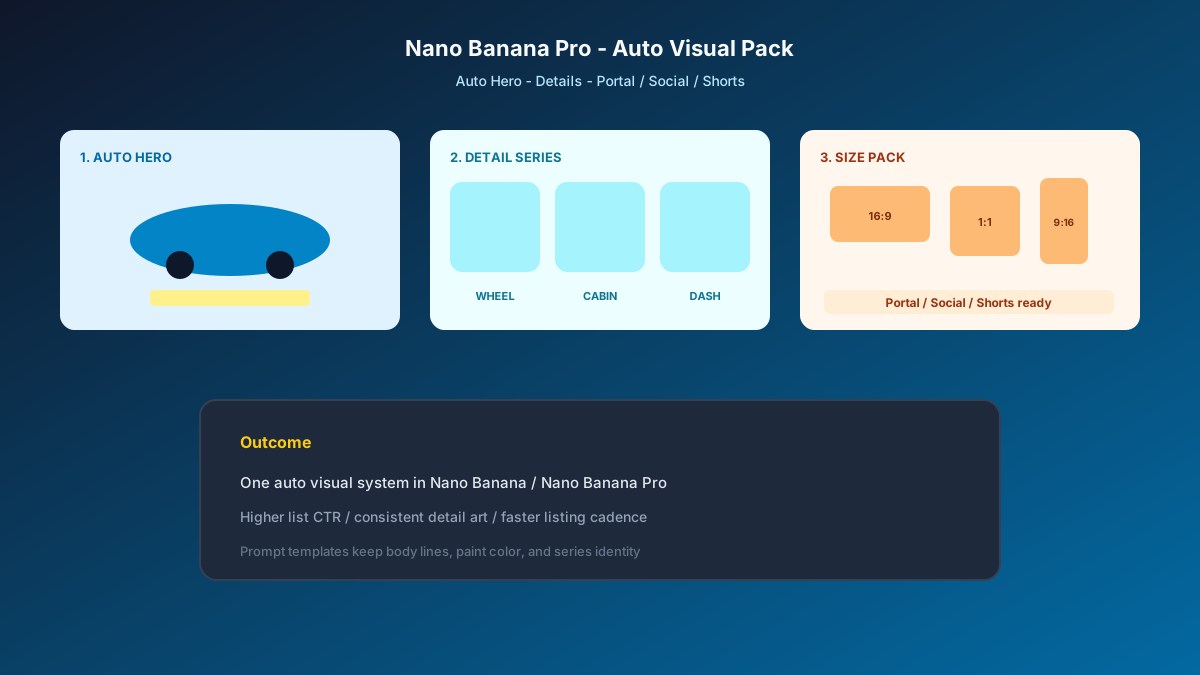
Nano Banana Pro builds on the fast generation experience of Nano Banana and suits commercial dealer cases that need undistorted body lines, controllable paint reflections, and realistic interior materials. Split the flow into three steps—hero tone-setting → detail-scene extension → portal/social/short-video size pack—and you list like an assembly line.
Workflow Overview: One Hero, Three Output Types
Follow strict order: after the vehicle hero is signed off, all detail and channel images carry similar lighting and color temperature so the list style does not split. The three prompt templates below can be copied into Nano Banana / Nano Banana Pro—replace [brackets] with your vehicle details.
| Stage | Output Type | Typical Use | Core Constraints |
|---|---|---|---|
| 1 | Vehicle hero Auto Hero | Portal list, first image | Real lines; clean reflections |
| 2 | Detail / interior scenes | Detail-page gallery | Unified style; parts recognizable |
| 3 | Multi-platform size pack | Portal / social / short video | Compliant ratios; selling points not cropped |
Stage 1: Vehicle Hero (List Click-Rate Anchor)
Use for: Autohome / used-car portal list first images, dealership sites, short-video opening heroes.
Key steps:
- Pick the most representative daytime phone shoot from a 45° front-three-quarter or side angle as the reference.
- Generate a 16:9 or platform-required hero: brighten, declutter, keep real body proportions and paint color.
- Archive with a version name (e.g.
auto-hero-suv-v1.png) as the full-vehicle style reference.
Based on the uploaded car phone shoot, generate a portal list hero: body type [sedan / SUV / MPV], stable composition; forbid changing body proportions, wheel position, and paint color;

Brighten to [natural daylight / soft studio light], neutral white balance; remove ground clutter and overexposed reflections;
Keep real body lines and paint texture; avoid over-HDR plastic look;
Quality suitable for auto-portal first images, tone consistent with Nano Banana auto visual standards: clean, professional, clickable.
Pro tip: State clearly “forbid changing body proportions and paint color,” or AI may “stretch” the car or shift color and trigger complaints. In Nano Banana Pro, img2img from a real photo keeps structure far more stable than pure txt2img.
Stage 2: Detail-Scene Extension (Unified Detail-Page Gallery Tone)
After the hero sets the tone, batch by walkthrough path: front fascia, side, rear, wheels, interior center console, rear seats, gauges.
Based on the uploaded vehicle-hero lighting style, process this new detail phone shoot into a same-car detail image: keep [same daylight + same white balance], part [wheels / center console / seats] clear and recognizable;

Requirements: match the hero style; forbid a new filter on every image; light tidy-up (declutter, control reflections); do not invent features that do not exist;
Composition [level correction / slight wide angle without distortion], suitable for **Nano Banana Pro** batch vehicle-gallery production.
Nano Banana multi-turn dialogue works well for micro-fixes: “pull highlights down a bit,” “cleaner background,” “clearer center console”—faster than rewriting the full prompt. Fix gallery order to lift browse completion:
- Hero: 45° front-three-quarter or side
- Exterior details: front / rear / wheels
- Interior: center console / seats / rear row
- Extras: gauges / trunk / feature highlights
Stage 3: Multi-Platform Size Pack (Portal, Social, Short Video at Once)
After vehicle art is locked, extend channel specs—avoid re-cropping per platform and cutting off the nose or wheels. Prepare at least these per car:
- 16:9 / 4:3: portal list and detail
- 1:1 / 4:5: social seeding and Moments-style posts
- 9:16: short-video covers and vertical feed
Based on the uploaded vehicle hero, adapt to [target ratio: 16:9 / 4:3 / 1:1 / 4:5 / 9:16] auto placement size;

Strictly preserve body recognition points, paint color, and clean tone; only adjust crop and whitespace by ratio;
[9:16 only] keep nose and selling-point copy clear of the bottom 18% subtitle/button zone;
[16:9 only] keep left-right body depth; avoid cropping into a cramped close-up;
Output ready for portals and social, style consistent with Nano Banana auto standards.
Brand Consistency: Many Cars Must Not Look Like Different Dealers Shot Them
The most common batch vehicle-photo failure is a new color temperature on every car. When building dealership / platform libraries in Nano Banana Pro, lock these habits:
- Same white-balance line: e.g. all “neutral daylight”
- Same tidy standard: clean ground, declutter, control reflections
- Fixed suffix line: “Consistent with Nano Banana auto visual standards: real lines, credible paint, no over-beautification”
For “before/after refresh” comparisons, clearly label Before/After and keep verifiable original phone shoots to avoid compliance risk.
Batch Checklist (Countdown to the Listing Window)
Count backward from the listing window:
| Day | Task | Tool |
|---|---|---|
| D-3 | List shoot checklist per vehicle (exterior / interior / details) | Sheet |
| D-2 | Daytime full-car phone shoots (overcast or soft light preferred) | Phone |
| D-2 | Generate vehicle hero (Template 1) and lock the look | Nano Banana Pro |
| D-1 | Batch detail / interior images (Template 2) | Nano Banana Pro |
| D-1 | Extend portal / social / short-video sizes (Template 3) | Nano Banana |
| D-0 | Upload to portal and sync short-video teaser | Ops |
Efficiency reference: Once fluent, one car yields about 12–20 finished frames; first drafts can finish within half a day. Teams using Nano Banana Pro shared templates also reduce brand fracture from salespeople applying their own filters.
Case Study: Used-Car Store Listed Five Vehicles in 48 Hours
A used-car store needed five in-stock cars live before the weekend; the photographer had no availability, and old shots looked dark and cluttered in mobile lists.
- Input: About 20 phone shoots per car (dark, with reflections)
- Step 1: Stage 1 template made the SUV hero—brightened and cleaned ground clutter
- Step 2: Processed wheels, center console, and rear seats in the same lighting
- Step 3: Extended 1:1 social images and 9:16 short-video covers
- Output: Upload-ready asset pack, entire pipeline in Nano Banana
Manager feedback: list CTR rose clearly versus old art; walk-in guests rated “matches the photos” higher; production cost was far below rush external shoots. Structured prompts + stable Nano Banana Pro img2img let sales spend time on showings and closing deals.
Conclusion: Leave Trust to Real Condition, Leave Imaging to the Workflow
Auto competition is about first-image clicks and in-store trust. When vehicle art shifts from “wait for a photographer” to “hero + template extension,” stores catch listing windows faster. Nano Banana Pro and Nano Banana fit as the execution engine for this auto SOP—not faking options, but helping real condition be seen more clearly.
After your next intake, lock the hero first, then open the three templates—you will find auto batch imaging in Nano Banana as clear and controllable as an inspection checklist.
FAQ
Q: Will the car look too fake and trigger complaints?
A: Always keep the live photo as reference and state “do not invent features or paint that do not exist.” Archive marketing art with original phone shoots; Nano Banana Pro img2img stays closer to the scene than pure txt2img.
Q: The body keeps getting stretched—what then?
A: Emphasize in the prompt “forbid changing body proportions and perspective.” Spot-check more at the hero stage; only then batch detail images.
Q: How should Nano Banana and Nano Banana Pro divide work?
A: Nano Banana Pro for hero sign-off and high-demand reflection control; Nano Banana for series extension and size micro-fixes. Templates are shared—pick the entry by account access.